Lebanon Under Fire: Ceasefire as Cover, Law as Casualty
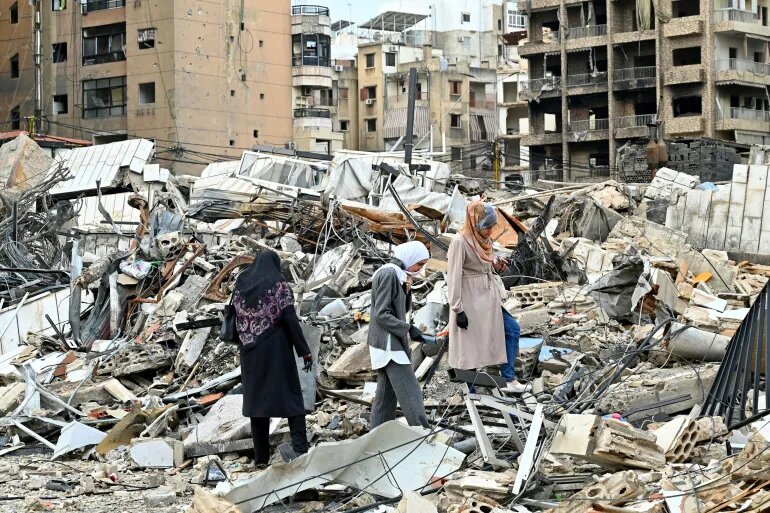
What is unfolding in Lebanon demands more than episodic outrage; it calls for a deeper political and legal reckoning that is attentive not only to the immediacy of violence but to the structural transformations it reveals. This is not merely a story of bombs falling and borders violated, but of how contemporary warfare is being recalibrated—where diplomacy increasingly functions to manage perception rather than to terminate conflict, and where international law is invoked with ritualistic frequency even as its substance is progressively hollowed out.
The recent understanding between the United States and Iran was presented as a stabilising moment in an otherwise volatile region, carrying with it the promise of de-escalation, or at the very least, containment. Lebanon, situated at the fault lines of regional power, was assumed to fall within this fragile architecture of restraint. Yet the conduct of Israel in the lead-up to the ceasefire—and the ambiguities that already surround its implementation—suggests something far more troubling: that ceasefires in the present moment no longer function as binding commitments, but as flexible instruments, shaped by power and open to unilateral reinterpretation.
The Landscape of Destruction
To speak of Lebanon today is to confront a reality of erasure that is not metaphorical but material, where entire villages in the south have been reduced to rubble with such intensity that geography itself begins to lose coherence. What once constituted a living social fabric—homes, schools, markets, and places of worship—has been transformed into debris fields, not as an incidental byproduct of war, but as a recurring feature of its conduct.
The scale of human suffering resists easy quantification, even as numbers attempt to impose order on chaos. Since the escalation in early 2026, over 2,000 people have been killed, more than 6,000 injured, and close to one million displaced. Yet these figures, stark as they are, obscure the layered realities they represent: families buried beneath collapsed structures, children rendered orphaned in an instant, and entire communities subjected to the slow, grinding violence of displacement that extends far beyond the moment of bombardment.
Hospitals, already weakened by Lebanon’s prolonged economic crisis, have been pushed to the brink of collapse, while reports of strikes affecting medical personnel—doctors, paramedics, and rescue workers - point to a deeper erosion of humanitarian norms. Under the Geneva Conventions, such individuals occupy a protected status that is meant to preserve the possibility of care even amidst destruction. When that protection is compromised, it is not merely a violation of law, but an indication that the moral architecture of warfare itself is under strain.
Law in Retreat: The Collapse of Normative Restraint
The legal framework governing armed conflict is neither silent nor ambiguous; it is built upon the interlocking principles of necessity, proportionality, and distinction, each intended to impose meaningful limits on the conduct of war. Yet what is unfolding in Lebanon suggests not the absence of these principles, but their progressive dilution through practice.
The repeated destruction of residential zones raises questions that cannot be contained within technical legal reasoning, for proportionality, when confronted with large-scale civilian harm, becomes less a matter of calculation and more one of ethical legitimacy. Similarly, the persistence of strikes in densely populated areas renders the principle of distinction increasingly fragile, as the line between combatant and civilian is not merely blurred but functionally disregarded. Over time, necessity itself risks being transformed from a constraint into a justification—stretched to accommodate actions that it was originally meant to limit.
Israel’s invocation of self-defence under Article 51 of the United Nations Charter must be situated within this context. While the right to self-defence is well established, it is not without boundaries, and it cannot be detached from the obligations imposed by international humanitarian law. When self-defence is asserted in ways that appear to override proportionality and distinction, it ceases to function as a legal safeguard and instead assumes the character of a political shield, insulating conduct from scrutiny rather than subjecting it to it.
The Ceasefire as Political Instrument
The announcement of a ceasefire introduces a moment of pause, but not necessarily a moment of resolution, and it is precisely this distinction that demands attention. While the language of diplomacy frames the ceasefire as a step toward stability, its political meaning is far more ambiguous, particularly when viewed against the intensity of military operations that preceded it.
There is a recurring pattern in contemporary conflict whereby escalation is not interrupted by negotiation, but rather precedes and shapes it, allowing military advantage to be translated into diplomatic leverage. In such a context, the ceasefire does not simply halt violence; it consolidates the outcomes produced by it. What emerges, then, is not a neutral instrument of peace, but a strategic pause - one that carries within it the possibility of renewal rather than resolution.
The fragility of the present ceasefire lies not only in its terms, but in the broader conditions that surround it. If past patterns are any indication, its durability will depend less on formal commitments and more on the shifting calculations of power. This raises an uncomfortable but necessary question: whether ceasefires in the current geopolitical order are designed to end conflict, or merely to regulate its tempo.
Asymmetry and the Distribution of Suffering
The asymmetrical nature of the conflict between Israel and Hezbollah is often invoked as an explanatory framework, but its implications extend beyond the battlefield into the realm of law and ethics. Israel’s overwhelming military superiority stands in contrast to Hezbollah’s hybrid structure, which operates within and alongside civilian populations. This asymmetry, however, does not mitigate responsibility; if anything, it intensifies the obligation to exercise restraint.
International humanitarian law does not permit the erosion of civilian protections on the grounds that an adversary is embedded within civilian spaces. On the contrary, it demands heightened caution in precisely such circumstances. Yet the patterns observed in Lebanon suggest a shift in operational logic, where civilian areas are increasingly treated as permissible sites of engagement, and where the burden of that engagement falls disproportionately on those least able to bear it.
In this sense, civilian suffering is not simply incidental to the conflict; it becomes structurally embedded within it, reflecting a mode of warfare in which the distinction between battlefield and living space is progressively collapsed.
Geopolitics and the Displacement of Sovereignty
Lebanon’s predicament cannot be understood in isolation from the wider geopolitical dynamics that shape the region, where local conflicts are inextricably linked to broader contests of power. The interplay between Israel and Iran, mediated through alliances and proxies, transforms Lebanon into a site of strategic confrontation rather than an autonomous political actor.
The role of the United States, particularly as a strategic ally of Israel, introduces an additional layer of complexity, as its rhetorical commitment to de-escalation coexists with forms of support that enable continued military action. Iran, for its part, extends its influence through Hezbollah while maintaining a degree of strategic distance, thereby reinforcing a system in which responsibility is diffused even as its consequences are concentrated.
Within this configuration, Lebanon’s sovereignty is not simply challenged; it is displaced, subordinated to a regional logic in which its territory becomes a medium through which larger powers negotiate their interests.
The Architecture of Impunity
What ultimately sustains the cycle of violence is not only the capacity to wage war, but the relative absence of mechanisms capable of enforcing accountability. While violations are documented and legal concerns articulated, the translation of these into consequences remains inconsistent, revealing a structural imbalance in the application of international law.
This imbalance is not accidental. It reflects a global order in which the enforcement of norms is mediated by political alignment, allowing certain actors to operate with a degree of latitude that would be untenable in other contexts. The result is not simply impunity, but a normalization of it, whereby the absence of accountability becomes an expected feature of conflict rather than an exception.
Conclusion: A Pause Without Resolution
The present ceasefire in Lebanon offers a momentary reprieve, but it does not alter the underlying dynamics that have produced the conflict, nor does it address the patterns of conduct that have defined it. To interpret it as a resolution would be to overlook the extent to which it is embedded within a broader cycle of escalation and containment.
What Lebanon reveals, in stark and unsettling terms, is not only the human cost of war, but the fragility of the frameworks that are meant to regulate it. When ceasefires become contingent, when legal principles are stretched beyond recognition, and when accountability remains elusive, the distinction between restraint and permissibility begins to erode.
In that erosion lies a deeper transformation—one in which the language of law persists, but its capacity to limit power diminishes. Lebanon, in this moment, stands not only as a site of suffering, but as an indication of where the international order may be heading: toward a condition in which war is not constrained by law, but conducted through its selective interpretation.
Leave a Comment